

3.1 Acute Undifferentiated Febrile illness
Acute febrile syndrome presents with headache, chills, or muscle and joint pains and is usually viral and often resolves without treatment. Acute febrile syndrome can also be caused by bacterial, rickettsial or parasitic infections and non-infective conditions like autoimmune disorders. Timing of blood tests is important for diagnosing it correctly.
Day 1 or 2 (of fever onset): A. Defer investigations or use of antimicrobials.
Day 3 or 4 (of fever onset): B. Total leukocyte count with differential, liver function tests, renal function tests, complete urine examination and random blood sugar and further investigations based on clinical symptoms and risk factors like: test for dengue antigen, peripheral blood smear for malarial parasite and rapid diagnostic test for malaria.
-
5 days of fever: C. Tests in B as above and 2 sets of blood cultures. Serology (IgM) for dengue, chikungunya, scrub typhus, leptospirosis can be done based on clinical suspicion. X-ray chest PA view.
-
7 days of fever: D. Tests as in C as above and USG abdomen and other tests as appropriate
If the patient is immunocompromised, focus on early investigations to know the organism responsible and organ system affected.
Even though most of the viral infections are self-limiting, influenza can lead to severe respiratory failure in immunocompromised hosts especially in elderly. This patient subset will benefit with early diagnosis with molecular diagnostics and early treatment with antivirals.
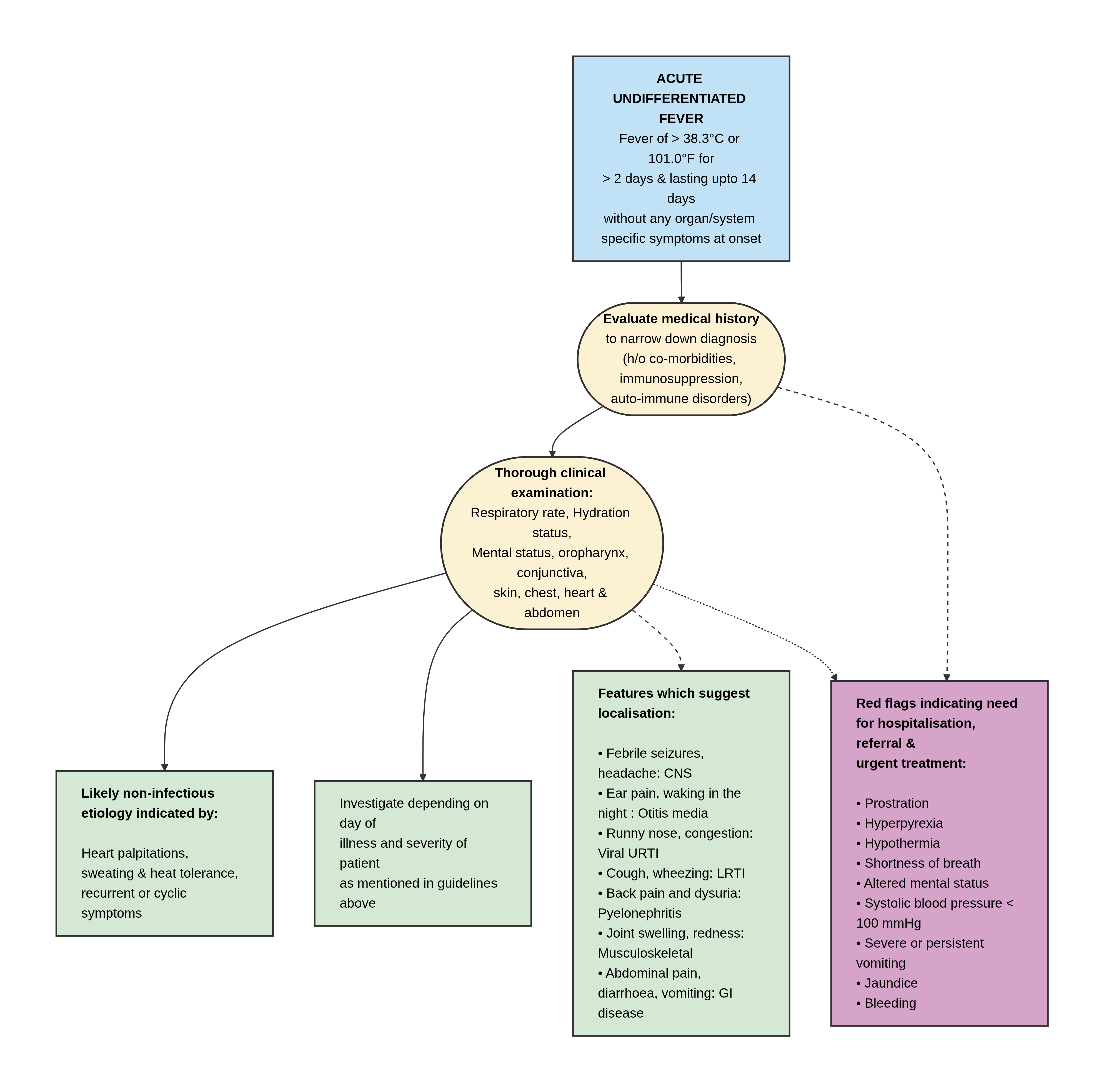
For common etiological agents of Acute Undifferentiated Febrile illness, see Annexure B.3.1